
Union County VISOR Coverage
Oregon calls its VINE-style service VISOR, short for Victim Information System in Oregon. The sheriff's office links the official VISOR portal. State materials list who is covered. The list runs from the Oregon Department of Corrections and the Oregon Youth Authority to county jails, Community Corrections, and the Board of Parole. The service is free, and anonymous use is allowed. An optional account adds delivery choices.
The Union County picture needs care. UCSO's link makes VISOR the official notification route for the county. The state poster also places county jails in the covered group. Even so, the public interface shows no Union-specific status until you search a person. An "Offline Jails" area appears too. So treat VISOR as the official county-jail notification path UCSO links, and confirm each Union County custody record in the live search.
VISOR covers custody status and alerts. It does not reproduce the UCCF roster's text fields, promise a booking photo, or hand down a court outcome. UCSO, the jail, and Oregon courts handle those.
Check Union County Custody on VISOR
Search one person at a time. State guidance accepts a name or an offender number, and multiple results can appear. Match on all lawful details, not a lookalike name.
- Open VISOR from the official Oregon address or the link on the UCSO website.
- Choose the person or offender search and enter the name or known offender number.
- Review all matches. Compare the displayed agency, facility, identifier, and custody details before selecting a record.
- If Union County does not appear, vary only known name details and check for a timing, transfer, release, or system issue.
- Confirm urgent local custody with UCCF at 541-963-1020 instead of treating no result as proof of release.
For arrest details, use the Union County recent-arrests sources. VISOR is a notification tool, never a substitute for a report, a case file, or the current roster print.
Union County VISOR Result Fields
A VISOR record centers on identity and custody events. Exact fields vary with the agency and the custody stage, but the state's public guidance supports a consistent reading framework.
| Result element | How to use it |
|---|---|
| Name | Compare spelling and all other available details before deciding a record is the intended person. |
| Offender number | A stronger match than name alone when the correct identifier is already known. |
| Custody status | A status within a participating system, subject to transmission and update timing. |
| Agency or facility | Shows the organization associated with the current record and helps route verification. |
| Custody event | May support notices for release, transfer, escape, or death. |
| Notification options | Allows a registrant to choose supported delivery methods and manage notices. |
If a result shows case or offense wording, it stays tied to the custody record. Court records hold any amended charge, dismissal, plea, acquittal, judgment, or sentence. Read status terms literally. "In custody" means the state reported at the last update. A transfer shifts the responsible site. A release means the person left the reported setting. That does not mean the charges went away. Escape and death alerts mark distinct events. None of them supplies the full police narrative or every court condition.
Register for Union Custody Alerts
Oregon DOJ says users can register for phone, email, or text alerts and stay anonymous. An account helps manage delivery choices. The official poster also describes customized delivery. The service cuts repeated manual checking, but it should never be the only safety plan.
- Find and open the correct person’s VISOR record before selecting registration.
- Choose the available event and delivery options, such as phone, text, or email.
- Enter the requested contact details. Create or retain any confirmation information the portal requires.
- Complete the confirmation steps shown by VISOR and keep the registration details in a secure place.
- Update or cancel the notice through the account or official support route when circumstances change.
State guidance lists 888-749-8080 and visor@doc.oregon.gov for VISOR help. Those contacts serve the notification system only. UCCF answers who is in Union County custody now. Keep your registration current. Check that the phone number or email on file still works, and follow the portal's confirmation steps. Choose only the channels VISOR actually offers. Never submit another person's contact details, and skip any unofficial alert service that asks for extra personal information.
Why Union VISOR Results Need Confirmation
The county-jail notification angle comes with a caveat. Official sources support adoption, not a guarantee for every entry. The sheriff links VISOR. The state describes county-jail coverage. Yet the public interface gives no Union-specific status until a dynamic search is run. A result can hinge on spelling, intake timing, release, transfer, record participation, or a temporary system limit.
A no-result can mean several things. It does not mean no arrest occurred. Start with the UCCF roster for current local custody. Call the jail when the answer is time sensitive. If the person has moved to sentenced state custody or local Community Corrections, the Oregon Offender Search becomes the better status source. Federal custody needs the right federal locator, since VISOR's Oregon scope is not a federal database.
The official resources page can locate organizations by county and location type. A resource listing is not a named-person result. Likewise, statewide talk of near-real-time alerts is not a guaranteed minute count for Union County. No local timing promise exists.
Union VISOR Interface Screens
The official VISOR registration page shows the account interface used to manage notification access.
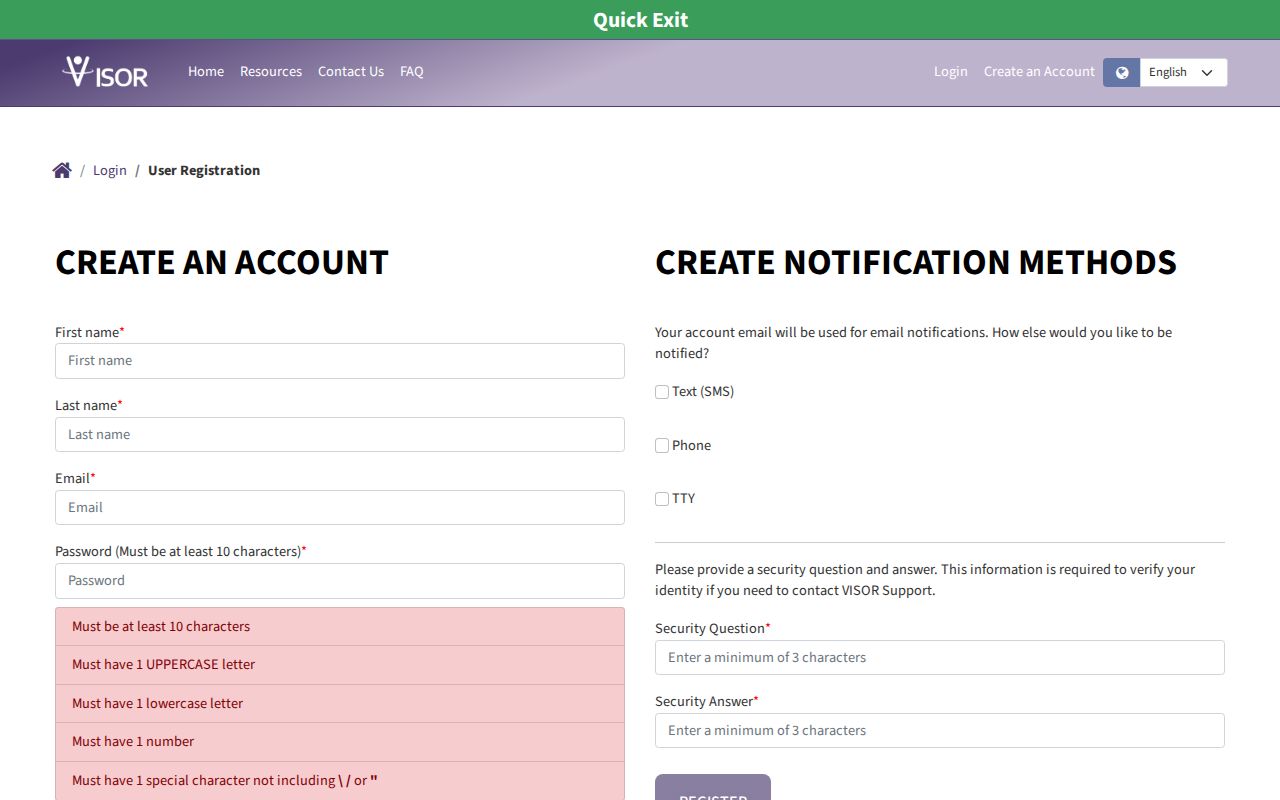
The VISOR registration screen shows signup controls only. The VISOR resources directory offers organization and location filters for statewide services.
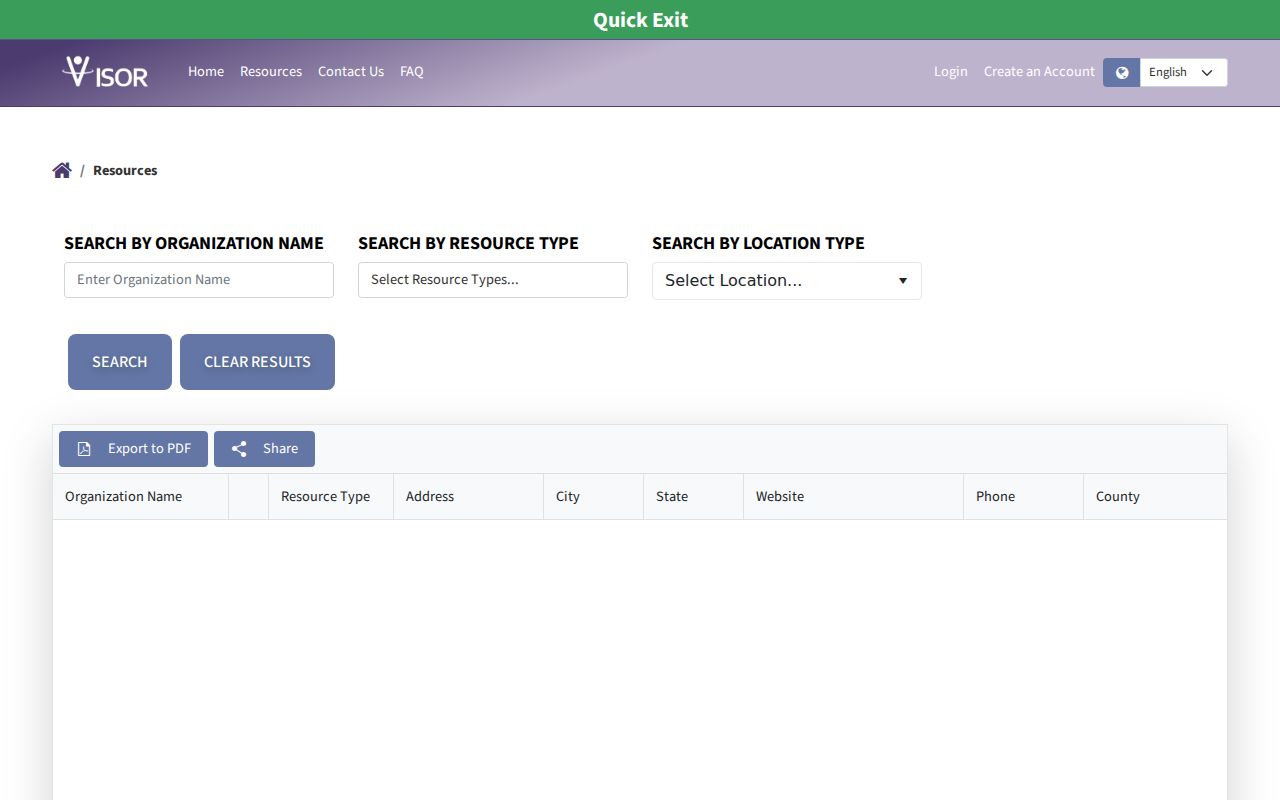
The directory helps identify services. It does not confirm that a named person sits in UCCF custody.
Union VINELink Limits and Safeguards
Timing is the first trap with any custody lookup. A fresh Union County arrest may land on the jail roster hours before a notification system knows about it. Transport, hold checks, and data entry all take time. The reverse happens too. Someone released or transferred can drop off the local roster while UCSO still holds the underlying booking record. So neither page gives the full record story on its own. VISOR also has firm boundaries. It does not replace the federal Bureau of Prisons locator. The ICE locator sits outside it too. So do the Oregon court register and a UCSO records request. It is not a mugshot source. The sheriff's office lists no jail app. Its Facebook page is a channel for announcements rather than a daily custody database. Stick with current .gov addresses, since UCSO left an older domain behind. An alert reports a status event, nothing more. Victims and families use alerts to cut down repeated checks. Alerts also help them reconnect after a move or get ready for a release. If an alert clashes with a roster or an agency statement, note the time of each source. Then call the responsible office. Data moves through systems at uneven speeds, and the newest timestamp usually matters most. For emergencies, dial 911. VISOR support can fix account and notification problems. It cannot replace an emergency response or hand out legal advice. With a routine custody question, have the person's full known name and any valid identifier ready. Then ask only for what the office may lawfully share. Juvenile records, sealed matters, protected victim data, and active investigations may limit public details. Never guess a missing field or fill it in from an old private page.
Public Record Search
Sponsored Results